Mr Tariq Ayoub - 20 Sep 2024
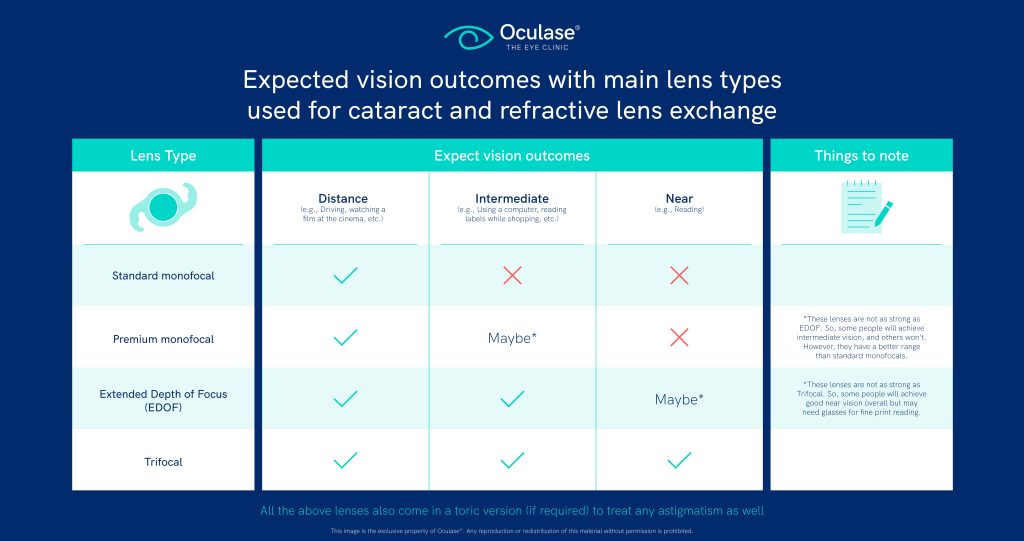 View and download a full-sized version of the infographic here.
When replacing the eye’s lens during procedures such as refractive lens exchange or cataract surgery, many types of monofocal (standard and premium) and multifocal lenses (e.g. EDOF and trifocal) are available, each with various vision results.
Your ophthalmologist will help you decide which lens type to choose based on your health, individual needs, and expected outcomes. They will help walk you through the advantages and disadvantages of each type.
Some of these vision outcomes are listed below.
Standard monofocals
These lenses can help achieve good distance vision after cataract or refractive lens exchange. However, these lenses are not strong enough to attain intermediate or near vision.
Premium monofocals
These lenses can help achieve good distance vision after cataract or refractive lens exchange. However, they are not as strong as extended depth of focus, so some people may achieve intermediate vision, and others won’t. However, they have a better range than standard monofocals.
Extended Depth of Focus (EDOF)
These lenses can help achieve good distance and intermediate vision after cataract or refractive lens exchange. However, they are not as strong as Trifocals, so some people may achieve good near vision overall but may need glasses for fine print reading.
Trifocal
These lenses can help good distance, intermediate, and near vision after cataract or refractive lens exchange.
At Oculase, we can help guide you through the outcomes you can expect after cataract or refractive lens exchange surgery. We offer expert care throughout every step of your eye health journey.
Book an appointment to talk to one of our expert specialists today.