Mr Tariq Ayoub - 25 Jan 2022
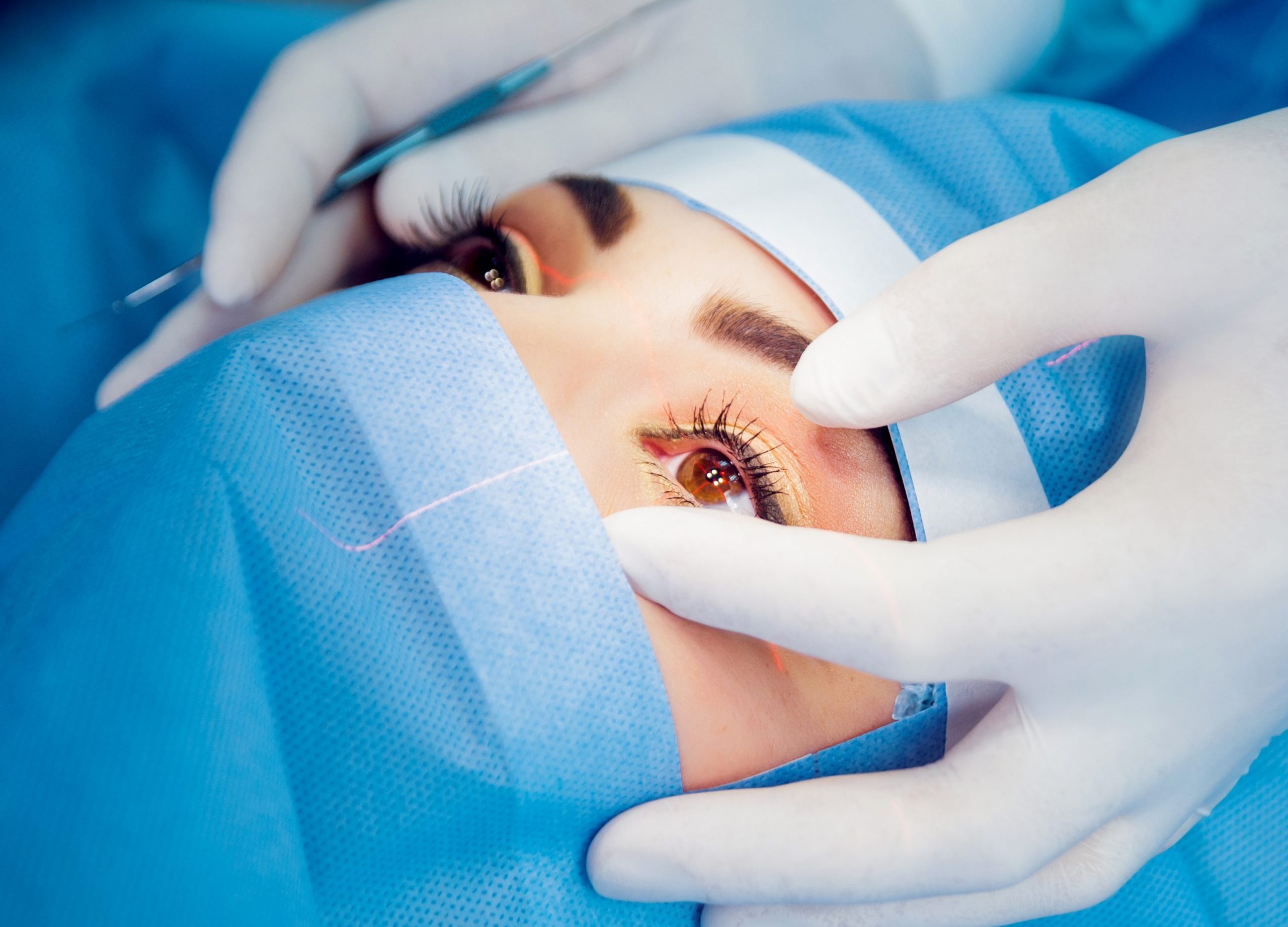
Are you considering having laser vision correction? You might be wondering if it is a safe surgery.
In this article, we will answer some of your questions about the risks of this procedure and dispel any myths. Read on to learn the risks and side effects of laser vision correction.
Is the procedure safe?
The National Institute for Health and Care Excellence (NICE) considers modern laser eye surgery a ‘safe and effective treatment’, supported by extensive scientific evidence.
Since its development in 1991, laser eye surgery has been constantly developed and refined. It’s one of the safest surgeries, with over 30 years of clinical data tracking its long-term outcomes. Over 6,000 peer-reviewed scientific papers on LASIK alone highlight its success. Each year, 100,000 people in the UK have laser eye surgery to correct their vision, with the numbers increasing due to its growing popularity.
What are the risks of laser eye surgery?
Although all surgeries carry some risk, most complications from laser eye surgery occur rarely.
In all forms of eye surgery, problems can occur during or after the procedure. However, we can correct most complications with medication or additional surgery. If you develop a problem, we will explain the concern and why further treatment is needed.
Up to 1 in 10 patients require an additional procedure to get the best result from laser eye surgery. Any additional operations will follow the same process as your original surgery and have a similar recovery period.
In extremely rare cases, laser eye surgery can cause retinal detachment in those with high myopia. Several studies have shown that the incidence rates of this issue occurring after LASIK surgery fall between 0.25% and 0.22%.
Overall, laser eye surgery is generally a safe procedure that results in a vast improvement in your vision.
Does laser eye surgery cause cataracts?
No, laser eye surgery doesn’t cause cataracts. This is because the procedure is carried out on the cornea, the clearer outer part of the eye. Cataracts develop within the eye’s natural lens, which is deeper inside your eye.
During the procedure, laser eye surgery will not affect the natural lens in the deeper part of your eye.
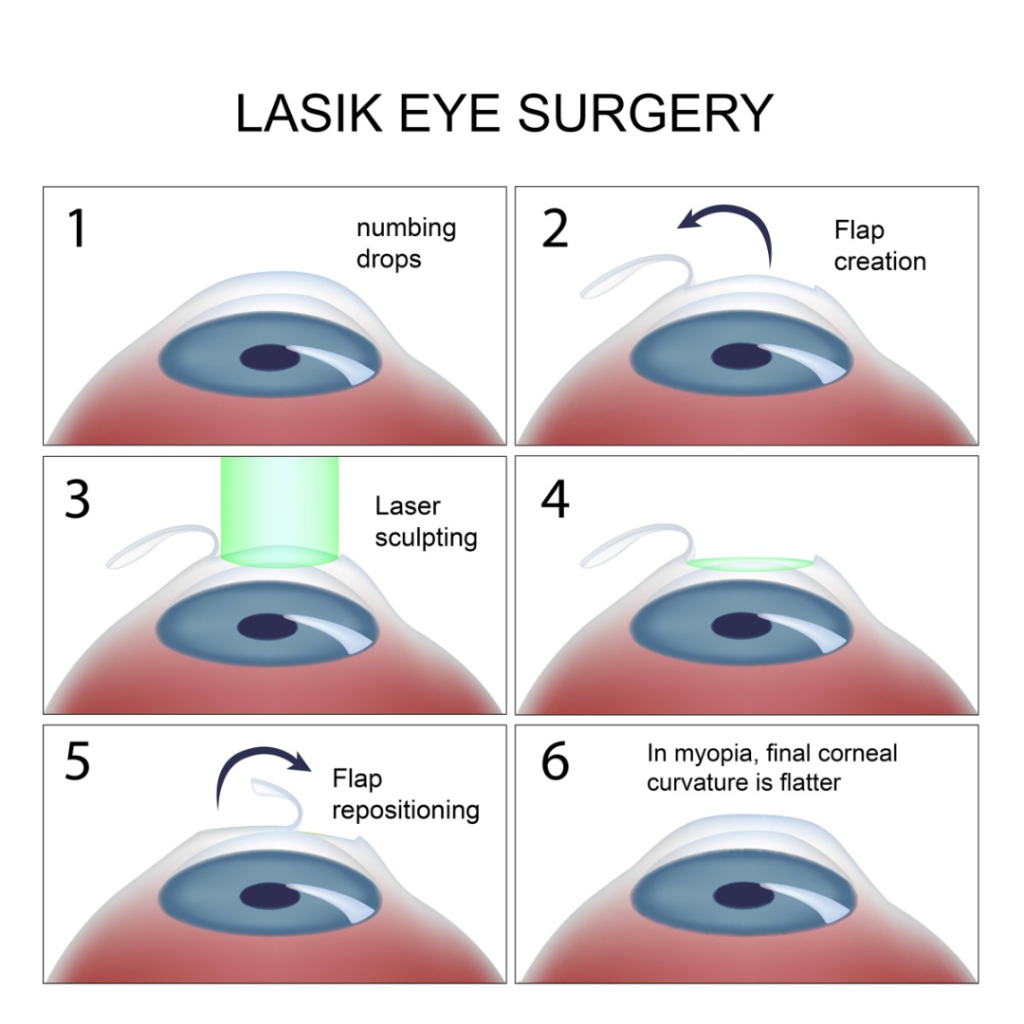
Below, we have illustrated what happens at each stage of your LASIK treatment:
Do different types of laser eye surgery have different levels of risk?
No, they are all very similar. A 2017 meta-study showed that although LASEK, LASIK and Trans-PRK use different methods, all types of laser corneal refractive surgeries are similar in effectiveness, safety, predictability, post-operative haze and comfort.
Can I lose my vision from laser eye surgery?
Permanent loss of vision after laser eye surgery is extremely rare. In the worst-case scenario, we can use a corneal transplant to replace a damaged block of tissue. Problems that can lead to a transplant include scarring after infection or an abnormal healing response.
However, less than 1 in 5000 patients require a corneal transplant after laser surgery. The transplant procedure is usually successful in restoring vision – though you may need glasses or contact lenses afterwards.
Can laser eye surgery cause corneal ectasia?
Corneal ectasia can occur due to the behaviour of the cornea over time after LASIK. This can lead to progressive thinning and weakening of the cornea over time.
With recent advances in technology and treatment, this complication is now rarely seen. The incidence of ectasia after surgery ranges between 0.04% to 0.6%.
Corneal ectasia is almost never seen after PRK/LASEK.
What are the side effects of laser eye surgery?
Some patients can experience side effects following laser eye surgery. Most can be minimised with good aftercare.
Flap complications
LASIK eye surgery involves creating a flap in the cornea to access the deeper layers of the cornea.
This can be done manually with a keratome or with femtosecond lasers. With these advances in laser technology, flap related complications are now increasingly rare.
Infection
Laser eye surgery has a low infection risk. You can further reduce this risk by following all post-operative instructions and using the drops as prescribed. These include avoiding makeup, dust, smoke, running water (like showers), and rubbing eyes.
Halos and Glare
All patients experience halos and glare following surgery due to inflammation in the cornea. As the eyes heal and the inflammation settles, halos will diminish over time.
If you have large pupils, you are more likely to experience halos and glare than the average patient. However, wavefront treatment can help reduce the incidence of these symptoms.
Dry eyes
All patients experience dry eyes after laser eye surgery. However, this is temporary and is generally resolved within a few weeks to three months as the eyes heal. Contact lens use must be stopped pre-surgery, as often this can improve any dry eye symptoms and help return the eye to its natural state.
In a small percentage of patients, it can persist due to co-existing ocular surface problems that were not adequately treated beforehand.
Is it worth having laser eye surgery?
Most people who have laser eye surgery can achieve 20/20 vision or better, which benefits most day-to-day activities.
Laser eye surgery has a good track record, but most people will still eventually need glasses for driving at night or reading as they get older. This is due to the natural effects of ageing on the eye.
However, if you choose not to have laser eye surgery now and continue wearing glasses, you can expect to wear separate pairs for reading and distance or varifocal glasses as you age.
Moving forward with laser eye surgery
Laser eye surgery can be life-changing for patients. As with all surgical procedures, it comes with risks but can be minimised or eliminated with the right care.
If you are considering laser eye surgery, the best way to minimise risk is to seek a reliable surgeon with a proven track record. Check that your chosen practitioner uses the most up-to-date technology, offers a thorough aftercare service, and has well-qualified staff.
Book an appointment
The Oculase team is comprised of outstanding professionals in their field. We use the latest clinical practices and technology to deliver the safest outcomes for our patients.
Book a consultation with us to find out more about your laser eye surgery options and what your procedure will look like.