Overview | Costs | Considerations | Video FAQs | FAQs
What is Complex Cataract Surgery?
The only treatment for cataracts is to remove them surgically. At Oculase, we offer basic and refractive surgery, as well as complex cataract surgery for less straightforward cases.
We all have different needs, and factors related to an individual’s health conditions can often complicate cataract surgery.
Cataract
Cataract Surgery
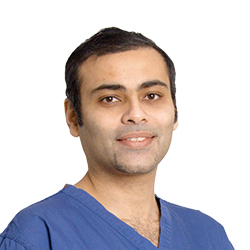

Jeffrey, Retired. Cataract Surgery
4:14
View
- Channel: Cataract,
- Playlist: Cataract Surgery,
- Title: Jeffrey, Retired. Cataract Surgery
- Featuring: Mr Tariq Ayoub
- Duration: 4:14


Video Description
In this video, Dr. Jeffrey O'Leary shares his experience undergoing cataract surgery at Oculase with Mr. Ayoub. As a retired engineer and lifelong glasses-wearer, he describes how the procedure significantly improved his vision, particularly for everyday tasks and watching rugby — a passion of his. He also reflects on the care and professionalism of the Oculase team and the remarkable improvement he noticed just days after surgery.
Video Transcript
My name is Dr. Jeffrey O’Leary. By profession, I’m an engineer. I’m retired now, but I do four or five days consulting a month. I had noticed that my eyesight had deteriorated. And I had a regular appointment with an optician who basically advised me that my cataracts in both eyes needed doing. uh which as i say, didn’t really surprise me because i’d noticed, particularly with close computer work etc i was i wouldn’t say struggling, but i i was aware of uh of uh uh quite a marked deterioration in my eyesight. Well, I’ve been wearing glasses since i was about six or seven. I mean, as long as i can remember. And I was advised by the surgeon, because one of my eyes is extremely weak, that by choosing the lenses properly, they could at least partially correct the difference in vision between the two eyes. And I would see a difference from having the lenses.
Well, it was brilliant. I mean, right from the very beginning, the first thing is I’m one of these people who always turns up on time and I get annoyed if people aren’t on time. And so everything was done very promptly, very efficiently. But more than that, the staff were very thoughtful and treated you like a human being and explained everything thoroughly. and just went over the top to make one feel comfortable and very relaxed about the whole thing. I experienced them initially. There was a strange thing the day after the surgery in the morning. It was like looking through diluted milk. That’s the best way I could describe it. It was cloudy and that went away after about an hour. And then I was getting halos for about two days, I suppose. But I’m not getting any halos now. It’s just remarkable. That’s all I can say. Almost from an hour after leaving the hospital, I suddenly realised that I could read some number plates on cars. It wasn’t brilliant then, an hour later, but…
Certainly two or three days later, I didn’t drive because I had no need to drive, but I felt that my vision was good enough to drive. And about a week later, I came back to the surgery. I caught the train, came back to the surgery for a post-treatment review. And I suddenly realized that in the station car park, I could read car number plates that were… sort of 50 yards away. It was just remarkable. And since then, it’s gradually improved and improved, and I think it’s now two months since the surgery, and I’m still seeing slight improvements, although right now, I would regard my eyesight as damn near perfect. The thing that I’m most pleased about is that I’m a big rugby fan. I played rugby to quite a high standard as a young man and
I suddenly realized going to a match the other weekend that I could see things that I couldn’t see before and you know you you you don’t realize what you can’t see until you realize that you can’t see them, if you know what I mean. If you’d ask me what I do to care the answer is yes. And would I recommend it? Yes.
Fill in your details below and we will get back to you shortly
David, Farmer. Cataract Surgery
2:55
View
- Channel: Cataract,
- Playlist: Cataract Surgery,
- Title: David, Farmer. Cataract Surgery
- Featuring: David Farmer
- Duration: 2:55
Video Description
In this video, David Penn, a lifelong farmer from Northamptonshire, shares his experience with lens surgery after struggling with close-up vision and the impracticality of glasses in his hands-on, outdoor lifestyle. He explains how the procedure was straightforward and painless, and how his surgeon guided him in choosing lenses tailored to his needs — including night driving and shooting. Since the surgery, David has noticed a significant improvement in his vision, minimal issues with halos, and growing interest from fellow farmers considering the same path.
Video Transcript
My name’s David Penn. I live in Northamptonshire and I’ve been farming all my life. I’m 64. I’m a farmer — very hands-on. I like to do a lot of the work myself, working inside and outside, driving tractors, handling livestock. So my eyes are pretty important to me.
The reason I had surgery was because I was struggling to see things close up. Being out and about in the elements, wearing glasses wasn’t an option. I used to break a pair every day. I’d buy cheap ones, but I’d still break them. So basically, when the opportunity came along, I thought, this is for me — it would see me out, really.
I was really led by the surgeon. I explained what I wanted out of the lenses. I enjoy doing a bit of shooting, so that made a difference. Night driving — that made a difference too. When we weighed up all the options, which the surgeon was very careful to explain, I decided on having those lenses. It was a no-brainer in the end.
I wasn’t really worried about it when I got here. It just happened, really. I wasn’t scared at all. Everyone says, “Oh, I’m not sure about having my eyes done,” but I found it was all very straightforward and painless. And to be able to get up and walk away was even better.
I can’t quite remember what it was like before. For the time of year, the halos are worse when driving — it’s been pretty damp and everything. But I don’t find it uncomfortable to drive. I think I could wear some glasses temporarily to help with that, but it hasn’t been a problem at all.
I’ve got a lot of colleagues in farming, and they’ve all shown an interest in what I’ve had done. They’re waiting to see the long-term results and are considering it themselves. So it’s been good.
Fill in your details below and we will get back to you shortly
Lindel, Retired. Cataract Surgery
4:45
View
- Channel: Cataract,
- Playlist: Cataract Surgery,
- Title: Lindel, Retired. Cataract Surgery
- Featuring: Mr Tariq Ayoub
- Duration: 4:45
Video Description
In this video, Lindel Graham shares her experience undergoing cataract surgery at Oculase with Mr. Ayoub. After struggling with deteriorating vision in her left eye, she chose a premium lens implant to help restore her sight — especially for activities like reading and playing tennis. Lindel explains why this lens suited her lifestyle and praises the care and confidence she felt with Mr. Ayoub and the team. She also discusses the significant improvement in her vision, her reduced need for glasses, and some ongoing light sensitivity, ultimately describing the procedure as life-changing.
Video Transcript
My name is Lindel Graham and I’m retired and I live in London and I play sort of sports like tennis and I’m interested in colour and things like that so I’m sort of very busy. Well, I had cataract surgery because I’d already had it in the right eye and my left eye I thought well maybe it might sort itself out but it certainly didn’t and it was getting worse and worse and I got to the stage where it was really difficult to actually sort of lead a normal life because just trying to read timetables or even read the paper or just go about my ordinary business was becoming more and more difficult. So it was sort of getting quite important to have it as soon as possible.
Well, I sort of looked into it in quite a lot of detail and I discussed it previously with Mr. Ayoub and it seemed to me that you’ve got more sort of diversity with this idea of lens than if you had just an ordinary lens. And also if you’re playing sport or something like that, you need the all-round sort of visual experience. And so this lens seemed to sort of be just what I wanted. And after a lot of thought, I decided on this lens.
I just had such confidence in Mr. Ayoub. I just completely trusted him and I felt completely safe in his hands. And I can be quite a nervous person. And so when I had it, I was just able to sort of sit back in the chair, relax, just know everything was going to be fine. And it was. And I received a lot of sort of attention from him before, afterwards, and the team were very helpful. And it was altogether a really satisfactory experience, not overwhelming, but just, you know, a very, very good experience.
Well, it’s been amazing. I can now see to do so many things that I couldn’t see to do before. I mean, simple things like, you know, sort of really a timetable, or reading the paper, actually, with, you know, being able to read close up was the most wonderful thing because that’s where I had been sort of, you know, found the problem before and playing sport and just generally going about my ordinary everyday business, you know, it just made such a difference to my life and brought a new sort of vividness into my life really, you know, just seeing with the doing and everything as well.
Now I didn’t get any halos but I did have shingles in my right eye, and that caused that eye to be very sensitive to light. And so I’m still very sensitive to light, because I think the two eyes, one sort of like talks to the other almost, doesn’t it? So I still, if I’m going out in the sunlight, I will wear a cap. And, you know, I make sure I wear a cap to play tennis. And certainly when I’m driving as well, you know, I do find I can be compromised by the sunlight. But I think that’s me personally. I don’t think it would be everybody having this lens.
I can read without glasses. In fact, for the first six weeks, I didn’t have any glasses at all. And so that was quite good. Then if I’m reading small print in a newspaper, it can be a little bit better if I’m using the glasses, but I didn’t need to. And so that really is amazing. Playing sport is much better. And just generally, I think that when you can see better, you have more confidence, and life is better. I’m just so pleased to have had it done.
So, I would thoroughly recommend this lens to people. And I would thoroughly recommend Mr Ayoub at Oculase, because I think he’s… He just is so kind and thoughtful and considerate and, you know, I have other people who maybe have used different consultants who haven’t had the same experience that I’ve had. So I feel very grateful. So thank you.
Fill in your details below and we will get back to you shortly
Why have cataract surgery privately?
0:46
View
- Playlist: Cataract Surgery,
- Title: Why have cataract surgery privately?
- Featuring: Mr Tariq Ayoub
- Duration: 0:46
Video Description
Tariq Ayoub recommends private cataract surgery for several reasons. You can bypass long waiting times and choose to have premium lens implants. We also offer top-up laser treatments for even better outcomes.
Learn more about cataract surgery from Mr Tariq Ayoub, or book a consultation to see him.
Video Transcript
The purpose of cataract surgery is to give you good vision so you can get on with your daily activities and your work. Privately you’re able to bypass long waiting times and have your surgery done at most within weeks. You also have the option of having premium lens implants, which give you good vision (excellent quality of vision), without the need for glasses or contact lenses. Additionally, you are able to have top up laser at Oculase to refine the vision to give you even better outcomes. Privately I would be your sole point of care for your cataract surgery assessing you before the surgery, during the surgery, and afterwards.
Fill in your details below and we will get back to you shortly
How is cataract surgery performed?
0:54
View
- Playlist: Cataract Surgery,
- Title: How is cataract surgery performed?
- Featuring: Mr Tariq Ayoub
- Duration: 0:54
Video Description
Our short animation shows how we would usually remove a cataract. Learn more about cataract surgery.
Video Transcript
Usually with cataract surgery a small incision is made in the eye. The front portion of the thin outer covering of the lens is opened to allow removal of the cataract inside. The cataract is gently broken up and vacuumed out, then a folded lens implant is inserted through the small incision and into the capsule where it unfolds and permanently takes the place of the clouded natural lens. With the cataract removed, the new lens implant clearly focuses light rays onto the retina. The power of the lens implant is selected for your individual eye.
Fill in your details below and we will get back to you shortly
Roy, Retired. Cataract Surgery
8:30
View
- Playlist: Cataract Surgery,Patient Testimonials,
- Title: Roy, Retired. Cataract Surgery
- Featuring: Mr Tariq Ayoub
- Duration: 8:30
Video Description
Roy Newman recalls how he came to Oculase for cataract surgery. He shared that he didn't want to wait for his eyes to deteriorate, as his optician recommended, before having the procedure. However, a colleague informed him that he could get a second opinion. Roy saw Mr Tariq Ayoub, who was happy to help restore Roy's vision and remove his cataract. Watch our video to hear Roy's account of the procedure and how he felt afterwards.
Read More
Video Transcript
My name is Roy Newman. Like most people, I attend the Opticians regularly and over a period of time probably about three years ago, my left eye in particular started to get really quite difficult to see out of. And if I was driving in night time, we often find that brake lights and things would suddenly be like a Christmas tree because you would have all lights all over the place rather than one single light. I’d come to the optician and they said to me your eyes, not that I needed telling, your eye is deteriorating quite a lot So he said, Well, you didn’t really have to wait like that. You can go along and have another opinion on it. And so he gave me a number and it turns out it was Dr [Tariq] Ayoub’s practice and I went along there. Extremely efficient. [What procedure did you have?] Well, the left eye had become very foggy and there were a lot of lights, particularly at night-time, that would spray, it would just blur. So it was a cataract and it was going to be removed and the right eye was not far behind the left eye. But the left eye was obviously the one to prioritise. So that was done. [What was the recovery like?] And immediately, immediately, although you’ve noticed a bit of difference beforehand, immediately the colours have come back into your eye, the blurriness has gone. It’s- It’s magic, really it does make everything so- You don’t realise how bad it’s got really until you’ve had it done and then having that one done I actually realised how bad my right eye was. And so they duly said let’s get over this now. You’ll have another inspection, another visit, and then in 6 weeks to 8 weeks and then all being well, we book you in for the next eye, which is was what happened and then it was exactly the same procedure very, very confidently dealt with. [How did the procedure go?] On both occasions and it was very successful and I’m delighted with their response and how good my eyes are now. In fact, Dr Ayoub, or Mr Ayoub, said you’ll probably still require to wear glasses for reading small print, which I do. But I can nearly read comfortably on a bright day, a newspaper, for example. And so it was win-win all around. [Would you recommend Oculase?] I’d find it hard to imagine there is going to be anybody better in the way they look after you, the courtesy, the care, the attention to detail, and then the aftercare where they check you at the end and everything. And I don’t know what more anybody could do to make it better, to be honest. I don’t know, I can’t compare. But, you can’t, I don’t see how you can be better.
Fill in your details below and we will get back to you shortly
What is a Cataract?
0:36
View
- Playlist: Cataract Surgery,
- Title: What is a Cataract?
- Featuring: Mr Tariq Ayoub
- Duration: 0:36
Video Description
Our Consultant Ophthalmologist, Mr Tariq Ayoub, briefly outlines what a cataract is, its main symptoms, and how and why it may develop. He also explains that cataract surgery is a commonly performed procedure and shares how safe it is. Find out more about cataract surgery or book a consultation to see Mr Tariq Ayoub.
Video Transcript
A cataract is a clouding of the natural crystalline lens inside the eye, and it develops in most people after the age of 65, although it can develop earlier on in life due to health or genetic conditions. The cataract results in blurring and misty vision and it can give you glare while driving at night. Cataract surgery is the most commonly performed procedure worldwide and is a very safe procedure.
Fill in your details below and we will get back to you shortly
When should I have cataract surgery?
0:50
View
- Playlist: Cataract Surgery,
- Title: When should I have cataract surgery?
- Featuring: Mr Tariq Ayoub
- Duration: 0:50
Video Description
Mr Tariq Ayoub encourages getting cataract surgery as soon as you meet the criteria. Don’t let your eyesight deteriorate slowly. He also recommends regular eye tests to maintain your vision. Book a consultation with our experienced specialist today to see if you qualify.
Video Transcript
There is no cut off age to doing cataract surgery, one is never too young or too old for it. Cataract surgery should only be done when it is affecting your vision or your lifestyle or your daily activities. Generally speaking, if you’re getting blurred vision or misty vision, or you’re struggling to drive at night due to a glare, then you would be an appropriate candidate to have cataract surgery. Another very important reason to consider having cataract surgery is if you do not meet the DVLA standards for driving. That is why it is so important to have your eyes assessed regularly and ensure that you are meeting these standards.
Fill in your details below and we will get back to you shortly
Will I still need glasses after cataract surgery?
1:10
View
- Playlist: Cataract Surgery,
- Title: Will I still need glasses after cataract surgery?
- Featuring: Mr Tariq Ayoub
- Duration: 1:10
Video Description
Whether you need glasses after cataract surgery depends on your choice of lens implant. Our video explains the options available, including advanced technology lenses if you decide to go private. We take into account your visual needs and expectations when making our recommendations. Book a consultation to start the process with our expert cataract surgeon.
Read More
Video Transcript
Need for glasses after cataract surgery is dependent on the lens implanted in your eye. There are various lens options available for this. Monofocal lens implants give you clear vision at one distance, but you will need glasses for all other distances. This is the standard lens available on the NHS. Privately, we have the option of offering extended depth of focus lenses, trifocal lenses or bifocal lenses. These are all advanced technology lenses. Broadly, patients find that they can do 95% of their activities without glasses with these lenses. However, in the 5% who do need glasses, it is for fine print reading or for nighttime driving usually. To all my private patients, I offer them the advanced technology lenses if they are suitable for it according to the assessment during the consultation.
Fill in your details below and we will get back to you shortly
What are the risks and side effects of cataract surgery?
1:40
View
- Playlist: Cataract Surgery,
- Title: What are the risks and side effects of cataract surgery?
- Featuring: Mr Tariq Ayoub
- Duration: 1:40
Video Description
Mr Tariq Ayoub, our Consultant Ophthalmologist, describes some short and long-term risks and side effects of cataract surgery. He also explains that we take precautions at Oculase to minimise any risks. Book a consultation today to see him at one of his clinics.
Video Transcript
Cataract surgery is one of the most commonly performed procedures worldwide, and it’s a very safe procedure. However, as with any procedure, there are some risks of side effects that you should be aware of. The most common side effect is the fact that your eyes are going to be a bit swollen and red soon after surgery. Usually this resolves within a few days after surgery, and you will be given lots of drops to use to help that. The second most common side effect of cataract surgery is developing what’s called a posterior capsular opacification, which is some clouding behind the lens in the eye. Everyone develops it at some point, but this may happen six months after the surgery. This may happen several years down the line. It is very easily dealt with by doing a little bit of laser to clear the clouding, which is a completely painless procedure and takes less than five minutes to do. Another important risk or side effect to surgery that you would need to know is that sometimes this initial surgery doesn’t go as planned, and if that’s the case, you may need to have a second surgery to get you to your final outcome. Vanishingly rare risks which may occur, is developing a severe infection or bleed in the eye, which could adversely affect your vision. However, at Oculase, we take all the necessary precautions to ensure that this does not happen.
Fill in your details below and we will get back to you shortly
Costs
At Oculase, cataract surgery treatment starts from £2,500 per eye.
Contact us today to discuss your payment plan with Oculase or arrange a consultation with one of our expert specialists.
Considerations before surgery
Factors which make cataract surgery and its outcome complicated include:
- Very high prescriptions
- Glaucoma or related conditions such as narrow-angle or pseudoexfoliation
- Diabetes
- Corneal conditions, such as keratoconus and corneal dystrophies
- Uveitis
- Previous trauma
- Previous eye surgery
- Use of particular medications (Doxazosin, Tamsulosin or Warfarin)
People with such complex cataracts require meticulous surgical planning and extensive counselling.
Read more about the management of risks and complications of cataract surgery.
Why choose Oculase?
Mr Ayoub is a highly experienced surgeon who regularly performs complex cataract surgeries with excellent outcomes. His outcomes are far superior to the expected national outcome benchmark. He will tailor your surgery and aftercare to meet the complexity of your cataract. This may include additional planned procedures or medicines during or after cataract surgery to ensure a successful outcome.
Read our blog to discover the many reasons why you should choose Oculase for your cataract surgery.

Book an appointment
Complex cataracts no longer need to hold you back. At Oculase, we deliver high-quality care to tackle your complex cataracts.
Book an appointment with our specialist to discuss how complex cataract surgery can help you.
Frequently asked questions
Book Consultation
Please complete the form or call us on the number below:
0330 128 1616
Our clinic sites are regulated by The Care Quality Commission (CQC)
Affiliations and Memberships
Our consultants are proud to be associated with the following organisations