
Struggling to read the small print or constantly switching between multiple pairs of glasses? If you’re over 40 and finding near vision tasks more challenging, you may be experiencing presbyopia. This guide explains how LASIK and other advanced treatment options can help correct presbyopia, reduce your dependence on glasses, and restore your visual freedom. Whether you’re exploring your options or ready to take the next step, here’s everything you need to know.
What is presbyopia?
Presbyopia is a common age-related eye condition that affects your ability to see things up close. It usually begins to appear in your early to mid-40s and is caused by a gradual loss of flexibility in the eye’s natural lens. As the lens becomes less able to change shape, focusing on nearby objects, like reading a book or looking at your phone becomes more difficult.
Presbyopia is a natural part of the ageing process and affects everyone to some degree, even those who have never had vision problems before. Many people first notice it when they start holding reading material further away or need better lighting to see clearly.
While reading glasses are a common solution, many patients today are seeking longer-term options, such as LASIK or other techniques, to reduce their dependence on glasses or contact lenses.
What are the treatments for presbyopia?
There are different treatment options available for presbyopia. These include both non-surgical and surgical approaches.
Non-surgical therapies are usually first-line treatment options. These include prescription glasses or contact lenses. Your prescription may need to be adjusted as your eyes change with age.
You may need to consider eye surgery for presbyopia, if non-surgical treatments are no longer helping or if you are looking for a more permanent solution. The two broad types of surgical treatments for presbyopia are LASIK eye surgery and refractive lens exchange (RLE).
How does LASIK treat presbyopia?
LASIK is the most common type of laser eye surgery used to treat presbyopia. During the procedure, a thin flap is created to access your cornea then a laser is used to reshape the cornea’s inner layers to correct your vision. At the end of the procedure, the flap is repositioned.
In LASIK surgery used to treat presbyopia, we correct the dominant eye for distance vision and the non-dominant eye for near vision (also known as monovision LASIK).
Monovision LASIK can be combined with an approach that induces a certain amount of spherical aberration to each eye. This increases the depth of focus and improves intermediate vision in addition to distance and near (also known as blended monovision LASIK).
A different approach to correcting presbyopia is to do PresbyLASIK. In this type of LASIK, the eyes are corrected for both near and distance vision by creating a multifocal cornea.
Watch Jo share her experience of LASIK for presbyopia in her patient testimonial:
How does a refractive lens exchange treat presbyopia?
Refractive lens exchange involves replacing your normal lens with an artificial one. These advanced technology artificial lens implants (multifocal lenses) give you excellent distance, intermediate and near vision. You will not need to wear glasses after surgery. RLE surgery can correct your presbyopia and prevent you from developing cataracts in the future, making it a more suitable option if you are above the age of 50.
Read our article to find out more about RLE, what it involves and its risks and benefits: Refractive Lens Exchange surgery: What is the process?
At Oculase, our specialist ophthalmologists will conduct a thorough consultation and assessment to determine which treatment is best for you.
What happens during a presbyopia consultation?
At Oculase, our specialists will first ask you questions about your presbyopia symptoms, medical history, medication, general health and lifestyle. We will then assess your vision and check your eye health to help us reach a diagnosis. Once we’ve determined which type of presbyopia treatment method is best suited to you, we’ll explain the benefits, risks and possible complications to ensure you feel relaxed and prepared.
If LASIK eye surgery is recommended, we will explain the process of what you can expect before, during and after. Learn more about the procedure here.
We also recommend bringing a list of questions you would like to ask to your appointment so we can make sure we cover any concerns you may have. You are also welcome to bring someone to your appointment.
How much does presbyopia surgery cost?
At Oculase, the cost of presbyopia treatment depends on the type of laser vision correction recommended for your eyes and prescription.
- Standard LASIK, LASEK or trans-PRK treatments start from £1,900 per eye
- LASIK with blended monovision – often used to treat presbyopia – starts from £2,250 per eye
- LASIK for complex prescriptions starts from £2,450 per eye
Your consultant ophthalmologist will carry out a thorough assessment of your eyes and vision to recommend the most suitable treatment option. During your consultation, you’ll also receive a personalised quote and guidance on payment options available.
Presbyopia Treatment: LASIK Video FAQs
The Royal College of Ophthalmologists recommend having laser eye surgery after the age of 18. However, at Oculase, we recommend having laser eye surgery after the age of 21. It is very important to ensure that your prescription is stable before proceeding with any sort of treatment. Most people assume that you can have laser eye surgery only in your 20s or 30s. This is incorrect. After the age of 40, people develop a condition called presbyopia where you need reading glasses in additions to your distance glasses. This can be corrected with laser eye surgery, with a treatment called PresbyLASIK or Monovision LASIK. In this treatment, you would have one eye corrected for distance and another eye corrected for reading. After the age of 55, consideration is given to a lens-based treatment, such as refractive lens exchange. In this procedure, your natural lens is replaced with a multifocal lens, allowing you to see in the distance and near without glasses. Laser eye surgery can be used to refine this treatment to give you good vision. Presbyopia is a condition that is seen in people after the age of 40. In presbyopia, you need to wear reading glasses in addition to any distance glasses that you may already be wearing. Presbyopia can be corrected with either laser eye surgery or lens replacement surgery. In laser eye surgery, in most people who would correct one eye for distance and the other eye for reading, allowing you to see and do most things without glasses. In lens replacement or refractive lens exchange, the natural lens is replaced with a multifocal lens, allowing you to see and do most things without glasses. This would also correct any prescription that you may have and treat any cataracts you may develop later on in life. Usually, we reserve refractive lens exchange or lens replacement surgery for people above the age of 50 or 55. Millions of laser vision correction procedures such as LASIK and TransPRK have been done worldwide over the past 30 years with excellent outcomes. Longterm data over the past 30 years published in peer review journals through large randomised trials have shown it to be safe and effective. We are able to assess people using our diagnostic tools, which are modern and have AI power technology to screen out those who are not suitable for laser vision correction. Modern laser platforms, such as the one we use at Oculase, ensures we give our patients the best outcomes. The longterm safety and efficacy of laser eye surgery has resulted in an over 90% satisfaction rate from patients in large clinical trials. Laser eye surgery can be used to treat myopia or shortsightedness. Generally, we would treat anyone up to a prescription of about -10 diopters. If you have prescription above this, you may be suitable for a different procedure, such as implantable contact lens surgery. Your suitability for the surgery is dependent on your scans and the health of your eye. The effects of laser eye surgery or laser vision correction stay with you for your whole life. However, as one ages and your eyeball changes in shape and in length, a little bit of prescription can recur again. If that were to happen, very often you have the option of having top-up laser to make you once again glasses or contact lenses free. Regardless, after the age of 45, everyone needs reading glasses. This has nothing to do with the effects of the laser, but in fact because the lens inside your eye is losing its elastic ability to focus on close objects. At that point in time, you have the option of either wearing reading glasses or contact lenses or having top-up laser to correct your reading vision or having refractive lens exchange surgery to make you glasses and contact lenses free. Laser eye surgery, or laser vision correction, is a very safe procedure, as thousands of these are performed worldwide every day. However, there are some side effects or risks that you need to be aware of. The most common side effect after surgery is grittiness and pain and blurred vision. With LASIK, this can last for about 24 hours after the surgery. With PRK, it’s a bit longer, for about three to five days after surgery. However, at one week, with both surgeries, your vision is a lot clearer, and you’re able to do most activities. You may find that at one week, your vision is very good, but you are noticing some glare, especially when looking at bright lights or the computer. This usually resolves over a few weeks. Some people also notice an initial eye strain after the surgery, which generally gets better over a few weeks as your eyes adapt to your newfound vision. The final important issue is that some people experience dry eyes after the surgery. In general, most people find that the dry eyes gets better after three months. I myself have had laser eye surgery, and my eyes were initially dry for a short period after surgery, but this has now resolved and rarely ever causes me a problem. Presbyopia is a condition where one loses their ability to read or focus on closeup objects. This develops in everyone after the age of 45. However, you could develop it a little earlier on in life or a little later on in life. It can be treated either with laser eye surgery or refractive lens exchange, depending on your age and your suitability for either procedure.
LASIK for Presbyopia
LASIK for Presbyopia
 Is there an age limit to having laser eye surgery?
1:06
View
Is there an age limit to having laser eye surgery?
1:06
View
Video Description
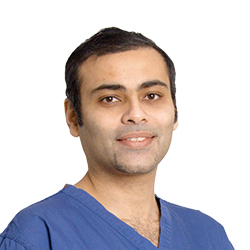
Mr Tariq Ayoub explains that Oculase - The Eye Clinic does not perform laser eye surgery on anyone younger than 21. This is to ensure that your prescription is stable before the procedure. Many people assume you can only get laser eye surgery in your 20s and 30s. However, it can also treat other conditions, such as presbyopia, that occur in your 40s and beyond. If you are over the age of 50, lens-based treatment may be considered instead of laser treatment.
Read More
Video Transcript
Read More
Fill in your details below and we will get back to you shortly
Can I have surgery for presbyopia?
0:54
View
Video Description
Mr Tariq Ayoub advises that you can have surgery for presbyopia: either laser eye surgery or lens replacement surgery. For laser eye surgery, one eye would be corrected for distance and one eye for reading. For lens replacement surgery, multifocal lenses would be implanted. Typically, lens replacement surgery is reserved for those over the age of 50.
Read More
Video Transcript
Read More
Fill in your details below and we will get back to you shortly
Does laser eye surgery work?
0:55
View
Video Description
Mr. Tariq Ayoub assure patients that laser eye surgery has worked for millions of people over the past thirty years all over the world. The long-term safety and efficacy results show an over 90% satisfaction rate in patients in clinical trials.
Video Transcript
Read More
Fill in your details below and we will get back to you shortly
Can I have laser eye surgery for myopia or short-sightedness?
0:27
View
Video Description
Mr Tariq Ayoub explains that laser eye surgery can correct myopia or short-sightedness. It is generally recommended for patients with a prescription up to -10 diopters. If your prescription is higher than this, you may be eligible for other treatments, such as implantable contact lenses.
Read More
Video Transcript
Read More
Fill in your details below and we will get back to you shortly
How is LASIK performed?
0:43
View
Video Description
This video, created by the American Academy of Ophthalmologists, explains what happens during a LASIK procedure.
Find out more information about LASIK laser eye surgery from Mr Tariq Ayoub or book a consultation to see him at his central London clinics.
Fill in your details below and we will get back to you shortly
How is PRK performed?
0:55
View
Video Description
This video, created by the American Academy of Ophthalmologists, explains what happens during a photorefractive keratectomy (PRK) surgery and how it is designed to improve your vision.
Fill in your details below and we will get back to you shortly
How long will the effects of laser eye surgery last?
1:03
View
Video Description
Consultant Ophthalmologist, Mr Tariq Ayoub, talks about how long the effects of laser eye surgery normally last. In addition, if your eyes change with age, other options are available. These include prescription glasses or, to remain glasses-free, ‘top-up’ laser eye treatment or refractive lens exchange.
Read More
Video Transcript
Read More
Fill in your details below and we will get back to you shortly
What are the side effects of laser eye surgery?
1:29
View
Video Description
Consultant Ophthalmologist, Mr Tariq Ayoub, explains that thousands of laser eye surgeries are performed worldwide every day. However, laser eye surgery has some side effects or risks that you need to be aware of. He outlines what these are and how they differ between LASIK and PRK.
Find out more information about LASIK laser eye surgery from Mr Tariq Ayoub or book a consultation to see him at his central London clinics.
Read More
Video Transcript
Read More
Fill in your details below and we will get back to you shortly
What is presbyopia?
0:29
View
Video Description
Mr Tariq Ayoub, Consultant Ophthalmologist, describes what presbyopia means. It is a condition, which usually develops after the age of 45, where you lose the ability to read or focus on close-up objects without glasses. Treatment options such as laser eye surgery or refractive lens exchange can be used in many cases.
Read More
Video Transcript
Read More
Fill in your details below and we will get back to you shortly


Is presbyopia treatment painful?
Most patients find presbyopia treatments like LASIK or other laser eye surgeries to be virtually painless. During the procedure, numbing eye drops are used to ensure you stay comfortable throughout. You might feel a slight pressure sensation, but no sharp pain.
After treatment, it’s normal to experience mild discomfort, such as dryness, itchiness or a gritty feeling for a day or two. These symptoms usually settle quickly and can be managed with prescribed eye drops and rest.
What are the benefits of LASIK eye surgery for presbyopia?
LASIK eye surgery can improve your vision and allow you to see without glasses. The recovery period is usually short and you should see improvements in 24-48 hours.
LASIK can give you a long-term solution to your vision problem and make it easier to do daily activities like reading, driving or watching television without vision support. You should also be able to play sports more easily, when you are not reliant on glasses.
Read more about the benefits in our article: What are the benefits of LASIK eye surgery
How long does presbyopia treatment last?
The results of presbyopia treatment can vary depending on the method used. Laser vision correction treatments like LASIK are designed to offer long-lasting improvement, often reducing or removing the need for reading glasses for many years. However, as the eyes continue to age, some changes to your vision may still occur over time.
For lens-based treatments, such as refractive lens exchange (RLE), the results are typically permanent. Because the natural lens is replaced with an artificial one, there’s no risk of developing cataracts in the future, and your near vision correction is long-lasting.
What are the side effects of presbyopia eye surgery?
LASIK eye surgery is generally a safe and effective procedure with a low complication rate. Our specialists will discuss all the possible risks with you before your procedure.
The procedure is generally pain-free and anaesthetic drops are used to numb the eyes beforehand. Your eyes may be sensitive to light straight after the surgery, but we will give you aftercare advice to help you with this.
You may experience other temporary side effects after the procedure. These can include red marks on your eyes, double or blurred vision, glares or halos. Your eyes may also feel dry, so we will give you some eyedrops for relief.
Flap problems after the procedure, where the flap doesn’t heal exactly where it should, and severe vision loss are also possible side effects, but these are very rare. If you are concerned about any risks or side effects from the procedure, our team is here to help and support you.
Are there alternative treatments for presbyopia?
While LASIK with blended monovision is a popular option, alternative treatments like LASEK and Trans-PRK may be recommended in certain cases. These surface-based laser eye surgeries reshape the cornea to improve near and distance vision without creating a flap in the cornea.
LASEK and Trans-PRK are often suggested for patients with thinner corneas, dry eyes, or certain lifestyle factors where LASIK may not be suitable. Like LASIK, these treatments can be customised to achieve blended vision and reduce dependence on reading glasses.

Book an appointment
If you are experiencing vision problems or have been diagnosed with presbyopia, book an appointment with our experienced specialists. We will explore your suitability for each treatment and develop your treatment plan with you.
Book an appointment to learn more about how we can help you.
Book Consultation
Please complete the form or call us on the number below:
0330 128 1616
Our clinic sites are regulated by The Care Quality Commission (CQC)